

Tendorix Application is designed to simplify and enhance the way you handle tenders and manage orders. Whether you’re a small business or a large enterprise, our platform helps you stay organized, competitive, and efficient at every step.
Why Choose Us?
Our application takes the complexity out of tender and order management. With an intuitive interface, easy-to-use features, and seamless integrations, you can focus more on winning tenders and delivering great service, while we handle the rest.
How Tendorix can help to streamline your Tender process
In Any Organization, the sales process begins with the initiation of tenders, a crucial step in engaging with the buyers. These tenders are meticulously crafted by a dedicated team. Their primary responsibility is to compile all essential tender details and requisite documentation, ensuring alignment with the company’s standards and objectives.
The process involves thorough review and requires securing approvals from various stakeholders within the organization. Key stakeholders in this approval process include representatives from Finance, Regulatory Affairs, Business Unit Heads, and Operations, among others. Each stakeholder brings their expertise to ensure that the tender aligns with both regulatory compliance and the company’s strategic direction.
Once the draft tender is complete and all approvals have been obtained, the finalized tender is submitted to the buyers.
Upon being awarded the tender, confirmation typically arrives as a purchase order, marking the successful conclusion of the tender process.
The Tenderix application streamlines this process, ensuring that all steps—from tender creation to final submission and approval—are managed efficiently and in compliance with internal standards.
AI Scalability

AI-powered Tendorix leverages advanced technologies like Natural Language Processing (NLP) and Predictive Analytics to optimize every step of the tender process. By using NLP, our system can automatically scan and match your business’s capabilities with relevant tender opportunities, ensuring you never miss a chance to bid. AI-driven aggregators gather tenders from various online platforms, filtering them based on your specific criteria like industry, location, and project type, saving you valuable time. Through advanced categorization and intelligent filtering, our system delivers tailored results that align with your business needs, helping you focus on the most promising opportunities.
AI’s predictive capabilities also help you evaluate the likelihood of winning a tender by analyzing historical data and competitor strategies. Additionally, AI for tender document analysis extracts key information, streamlines compliance checking, and reduces manual errors, ensuring that your bids are accurate and fully compliant. Our intelligent reporting and analytics provide actionable insights into your tender performance, competitor behavior, and market trends, helping you optimize your future bidding strategies.
For even greater efficiency, AI chatbots offer 24/7 support for your team, answering questions and providing guidance on bid submissions. Finally, AI-driven bid preparation tools assist with content generation, review, and proposal writing, ensuring your submissions are high-quality and tailored for success. With our system, you can enhance your tender management process, reduce risks, and increase your chances of winning, all while saving time and improving accuracy.
OMS Flow
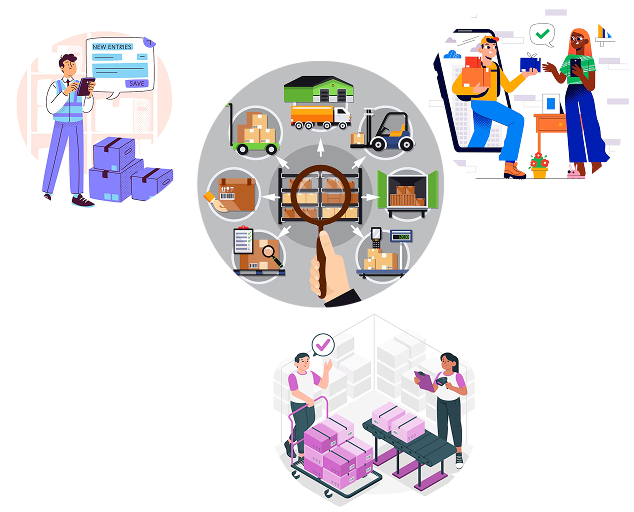
Upon receiving a purchase order from an institution, the Order Manager takes the lead in initiating a Sales Order, making specific reference to the corresponding tender.
Once the Sales Order is generated, it is then assigned to an Order Executive, who assumes responsibility for meticulously completing the order details, including the necessary documentation and ensuring compliance with a predefined checklist.
After the meticulous preparation, the Order Executive submits the Sales Order for a formal approval process to ensure it meets all company standards and requirements.
Upon obtaining the necessary approvals, the Sales Order is seamlessly transferred to the Depot Manager, who plays a crucial role in overseeing its execution and ensuring the order is fulfilled in accordance with established protocols and standards.
Supplier Chain Management
After an order is submitted for execution, the Depot Manager takes responsibility for updating the execution details within the system. If necessary, the order may be returned to the Order Entry (OE) team for further action.
The Depot Manager also tracks pending Proof of Delivery (POD) documents from customers, ensuring that all required documentation is received and properly recorded.
Additionally, the Depot Manager monitors and tracks payments related to the order, ensuring that the financial aspects are managed accurately and in line with company processes through the system.
Integration with Enterprise Systems
Integrating ERP, CRM and other enterprise systems with Tendorix can create significant improvements in operational efficiency, customer satisfaction, and compliance. By automating workflows, ensuring accurate data synchronization, and offering end-to-end visibility across departments, organizations can enhance productivity and make more informed decisions throughout the tender and order lifecycle.
Workflow Automation
Workflow automation revolutionizes business processes by using technology to streamline and automate tasks, significantly increasing efficiency, reducing errors, and improving communication across departments. In Tender Management, Order Management, and Supplier Chain Management, automation transforms manual, time-consuming tasks into seamless, efficient operations. For Tender Management, automation simplifies tender discovery by using AI-powered alerts to automatically search for relevant tenders based on specific criteria. Document retrieval, risk assessments, and bid proposal creation are also automated, ensuring quick and accurate responses. In Order Management, automation captures customer orders, verifies details, and processes them without manual intervention. It also integrates with inventory systems, ensuring real-time stock updates and smooth order fulfillment. Automated systems handle tasks like shipping notifications, invoicing, payment processing, and returns management, ensuring a seamless experience for both businesses and customers. Supplier Chain Management benefits from automation through processes like receiving goods, dynamic stock organization, automated picking, packing, and shipping. It helps optimize space, streamline order picking, and ensure quick, accurate deliveries. When these automated systems are integrated, data and processes flow smoothly across the tender, order, and warehouse stages, ensuring efficiency and accuracy from start to finish. The result is increased efficiency, reduced errors, improved visibility, faster decision-making, and significant cost savings. This workflow automation not only improves operational performance but also enhances customer satisfaction by speeding up processes and reducing manual tasks.
Document management And Handling
Effective document management is crucial throughout the Tender and Order lifecycle to ensure smooth and accurate operations. For Tender Document Management, the process begins with the creation of Request for Proposals (RFP) or Request for Quotation (RFQ) documents, which are stored in a centralized document management system (DMS) with version control and access restrictions. When a tender is released, document retrieval and analysis are automated using Optical Character Recognition (OCR) and Natural Language Processing (NLP), extracting key data like specifications, deadlines, and compliance requirements. This data is organized for easy retrieval, streamlining the evaluation and bid preparation stages, with teams collaborating on proposal drafting and ensuring all documents are reviewed and approved. Once the proposal is finalized, the system automatically compiles and packages the documents for submission, ensuring compliance with submission guidelines. In Order Management, after a tender is awarded, the system generates essential documents like Order Confirmations, Picking Lists, and Packing Slips, and integrates with logistics systems to create shipping labels and track deliveries. Invoices, delivery notes, and compliance documents are automatically generated, ensuring that all necessary legal and regulatory paperwork is in place. As the order progresses, real-time notifications are sent to customers, keeping them informed about order status and delivery timelines. In the Warehouse and Delivery phase, Goods Receipt documents, Inventory Updates, and Shipping Documentation are automatically generated, and a Proof of Delivery (POD) is captured and stored. Adopting best practices like centralized document storage, version control, automation, and stringent security protocols ensures efficient, accurate, and compliant document handling. Regular audits, an audit trail for tracking document changes, and compliance with legal requirements further enhance the document management process, reducing errors and improving overall efficiency in both tender and order operations.
Compliance Management
Compliance management plays a critical role throughout both the tender and order lifecycle, ensuring that all processes adhere to applicable laws, regulations, and industry standards. In the tender documentation phase, organizations must ensure that all documents comply with government procurement regulations, environmental laws, and labor laws, while also following ethical procurement practices and clearly defining tender specifications. The tender evaluation process further requires that bidders meet specific eligibility criteria, submit compliance documents such as certifications and legal declarations, and ensure fair and transparent evaluations. After the tender is awarded, contractual compliance is essential, with contracts including clauses related to data protection, intellectual property, payment terms, and regular audits to ensure adherence to legal standards. Vendor management involves due diligence to verify suppliers’ compliance status, with ongoing monitoring throughout the contract period to ensure that they meet the agreed terms and regulatory standards. In the order lifecycle, compliance continues with the order placement, ensuring that payment terms, import/export documentation, and other details align with regulations. Financial and tax compliance is also critical, with invoices needing to comply with tax laws, especially for international transactions. In inventory and warehouse management, adherence to inventory standards, safety regulations, and environmental laws for storage is necessary. Shipping and delivery compliance ensures that all relevant export/import certificates and transportation regulations are followed, while delivery and acceptance must verify that goods meet order specifications and industry standards. Additionally, warranty and after-sales compliance ensures that terms align with consumer protection laws. Risk management is a key element throughout, with legal, financial, and operational risks being identified and mitigated through regular contract reviews, credit checks, and performance monitoring. Organizations can also leverage technology tools, such as Document Management Systems (DMS), automated compliance tools, and audit reporting tools, to streamline processes, manage compliance, and track risks efficiently. Moreover, ongoing training and awareness programs ensure that all stakeholders are up-to-date on compliance standards, regulatory changes, and best practices, maintaining compliance across all stages of the tender and order lifecycle.